SkyCity Entertainment Group Reports FY26 Financial Results With Notable Shifts in Profit and Revenue
Amir Peters · Aug 20, 2026

SkyCity Entertainment Group Reports FY26 Financial Results With Notable Shifts in Profit and Revenue
SkyCity Entertainment Group released its financial results for the year ended 30 June 2026 in August 2026, and the numbers show a mixed picture where overall revenue climbed even as key profit metrics declined sharply. Net profit after tax fell 37.6 percent year-on-year to NZ$18.2 million, which converts to approximately US$10.8 million, while EBITDA dropped 44.2 percent to NZ$120.5 million. Revenue increased 6.5 percent to NZ$878.9 million, yet gaming revenue declined 5.9 percent because of several overlapping pressures that included the introduction of mandatory carded play.
Breakdown of Key Financial Figures
Observers note that the contrast between rising total revenue and falling gaming revenue highlights how non-gaming segments contributed to the top-line growth while the core gaming business faced headwinds. The mandatory carded play rollout produced a negative EBITDA impact estimated between NZ$20 million and NZ$30 million, and this change coincided with weaker premium play activity along with reduced visitation linked to the Middle East conflict. Higher operating costs tied to the new NZICC further weighed on margins, and these elements combined to drive the reported profit declines despite the broader revenue uptick.
Impact of Mandatory Carded Play and Market Conditions
Data from the period reveals that mandatory carded play altered customer behavior in measurable ways, with the NZ$20-30 million EBITDA hit reflecting both direct compliance expenses and indirect effects on play volumes. Weaker premium play compounded the situation because high-value customers reduced activity amid global travel uncertainties stemming from the Middle East conflict. Lower visitation overall meant fewer patrons at SkyCity properties, and this drop occurred at the same time the company absorbed elevated costs from operating the newly completed NZICC facility, which added to the expense base without immediate offsetting revenue gains in every segment.
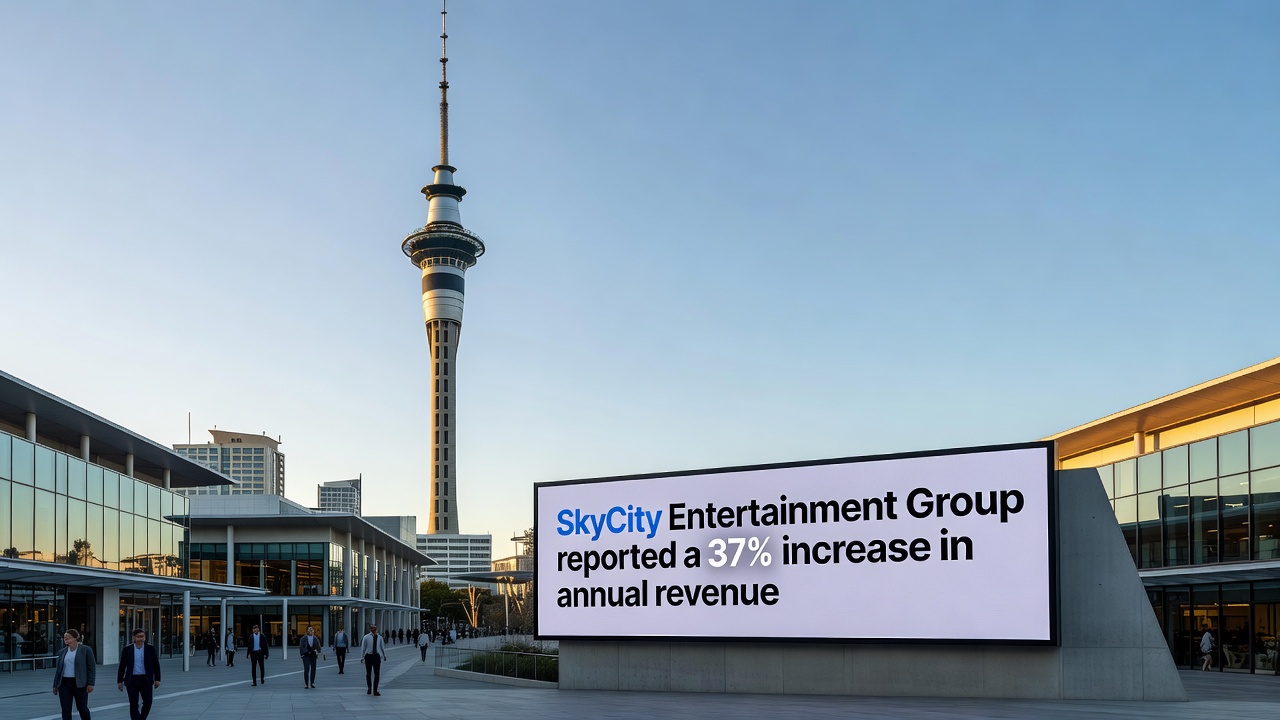
Those who track casino operations in New Zealand point out that the 5.9 percent gaming revenue decline occurred against a backdrop where total revenue still rose 6.5 percent, indicating strength in areas outside traditional gaming such as hospitality and events hosted at the NZICC. The EBITDA contraction of 44.2 percent to NZ$120.5 million underscores how fixed and variable cost increases can outpace revenue growth when multiple external factors align, and the net profit after tax of NZ$18.2 million represents the bottom-line outcome after all these elements are accounted for in the year-end figures.
Operational Factors and Cost Pressures
Experts have observed that the new NZICC introduced higher operating costs that affected the full-year results, including staffing, maintenance, and integration expenses that were not fully offset by incremental revenue during the initial period. The Middle East conflict contributed to softer international visitation patterns, which in turn reduced foot traffic at SkyCity venues and limited opportunities for premium play segments. Mandatory carded play, implemented as a regulatory measure, required system upgrades and customer education efforts that carried both upfront and ongoing costs, and these changes produced the quantified NZ$20-30 million negative EBITDA impact cited in the results.
Revenue Composition and Year-on-Year Comparison
Figures reveal that the 6.5 percent revenue increase to NZ$878.9 million came from diversified sources even while gaming revenue contracted 5.9 percent, and this divergence shows how non-gaming operations helped stabilize the overall topline. The year-on-year comparison places the net profit decline of 37.6 percent and the EBITDA drop of 44.2 percent in context, because both metrics reflect the cumulative weight of carded play adjustments, premium play softness, visitation changes, and NZICC-related costs. According to the FY26 Financial Results, these factors shaped the reported outcomes for the twelve months ended 30 June 2026.
Conclusion
The FY26 results for SkyCity Entertainment Group illustrate how regulatory changes, geopolitical events, and capital project costs can converge to pressure profitability metrics even when aggregate revenue grows. The specific declines in net profit after tax and EBITDA, alongside the rise in total revenue and the drop in gaming revenue, provide a clear snapshot of the operating environment during that period, and the quantified impacts from mandatory carded play plus the NZICC highlight the tangible effects on the financial statements released in August 2026.